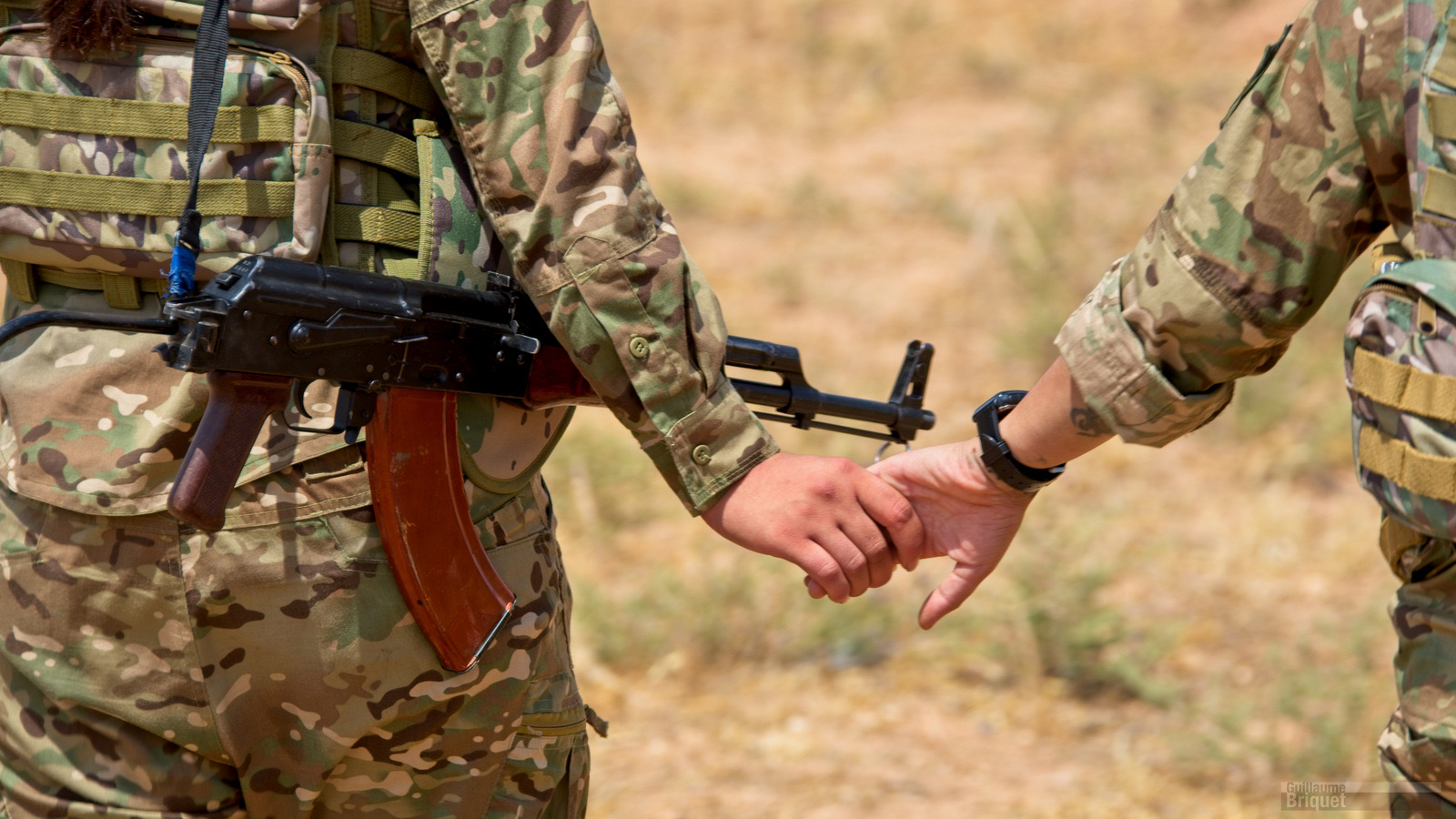
In a secret house in northern Syria, wounded Kurdish guerrilla fighters live with phantom pain in the shadow of an unfulfilled revolution and an endangered resistance movement. Emmy winner Maryam Ebrahimi delivers a poignant yet defiant portrait of a hidden community in the autonomous Kurdish province.
The Phantom Pain of Rojava brings a post-war story about four friends who live together in a veterans home. Once celebrated as heroines and heroes in the fight against ISIS, but today they live with their wounded bodies and phantom pains, hiding from the new and invisible war waged by drones. Technology has changed drastically since they left the battlefields behind, with the fight shifting from ground to air. Kurdish guerrillas are oppressed by new inhuman machines that monitor and attack them from thousands of kilometers away. The director spent five years with them, gaining unusual trust and a close access to this affectionate and, despite numerous adversities, joyful community, founded upon the principles of ecofeminism and socialist self-management. From an intimate angle, Ebrahimi follows their efforts to recover their bodies and keep faith in the women’s revolution and political ideals to which they dedicated their lives.
From the moment when local forces gained autonomous control of the region, women have been involved in leading every aspect of life in Rojava – politics, organization, culture, education, and self-defense. The Women’s Protection Units (YPJ) have attracted global attention for their significant role in the fight against the jihadist Daesh. But behind this resistance lies the everyday struggle of women to defend themselves from their oppressed status in a patriarchal capitalist system. Although they were once the darlings of the West for keeping terrorists at bay, The Phantom Pain of Rojava shows that this support was only declarative, and they are now forced to manage without allies in the fight to preserve their autonomy. The fate of the Kurdish population and Rojava’s self-determination is particularly uncertain after the fall of the Assad regime and the decision of the new Syrian government to integrate the Syrian Democratic Forces into the national military structure. Do the brave Kurdish women have any friends today other than the mountains that surround them and protect them from invisible drones? They deserve to be shown concrete solidarity, and not just empty and faded symbolic gestures. Therefore, let’s not forget their struggle and sacrifice because, as the revolutionary slogan says, “Rojava is hope, resistance and freedom.”



Trailer
Screening schedule
- Dokukino KIC Q&A